How we come to faith influences how we stay.
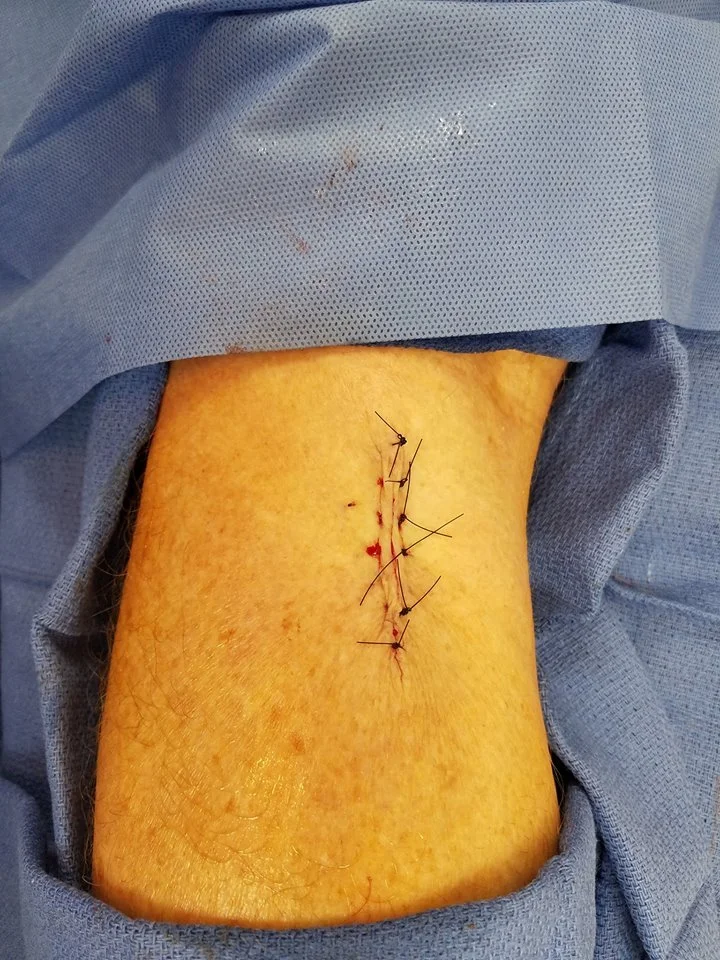
A few weeks ago, my dermatologist cut out my fifth skin cancer, and I told a friend that the margins were all clear and the cancer had not spread. In relief, I added, “God is good.” Then I thought of the many friends, some who love God deeply, who currently struggle with very serious cancers and other health issues. For some, death approaches and when is the only question. What about them? I had to add, “And, he would be just as good if the news had been bad, but I do rejoice.”
That prompted more pondering, about God and trouble, about the reasons people enter into faith, about the downstream effects of those reasons. Many, including myself, first come to God because of what he can do for us. Our problems that he can fix. Our guilt he can forgive. A loved family member we want to see in heaven. These initial reasons are valid. God’s love and grace work do benefit us. But they bring a danger, when our needs continue to primarily power our relationship.
Joe feared hell, accepted Christ, served him, then as his fear of hell subsided, he departed. Sandi came to Jesus when God healed a bad marriage. But she continued to view him as a cosmic bellboy, to please her. Her spirit grew critical, and while she continued, she never fully surrendered.
Focusing on what God will do for us tends to have two results when God doesn’t seem to come through. Some leave entirely, like Joe. Some remain, like Sandi, but on a self-absorbed level, how will God benefit me?
Here’s an option. Mature your faith, move beyond what he will do to who he is. Fall so madly in love with God, realizing the privilege we have to know the Creator of the universe, that the joy of knowing him so far transcends our troubles and disappointments. On any level. He’s God, we’re not.
In an email discussion that sparked many of these thoughts, my friend John Southwood reminded me of this passage, “Though the fig tree should not blossom and there be no fruit on the vines, though the yield of the olive should fail and the fields produce no food, though the flock should be cut off from the fold and there be no cattle in the stalls, yet I will exult in the Lord, I will rejoice in the God of my salvation. The Lord God is my strength” (Habakkuk 3:17-18).
When we celebrate the ecstasy of knowing God, we have all what we need.
Kick Starting the Application
On the continuum of reasons to believe, with focusing on our needs at one end and focusing on God at the other, where do you come down? Think back, and determine what mostly led you to Jesus. Is that still your primary reason? How has it changed? What has caused the growth? What specific change can you make to move closer to focusing the most on God? Will you?