Navigating our flaws
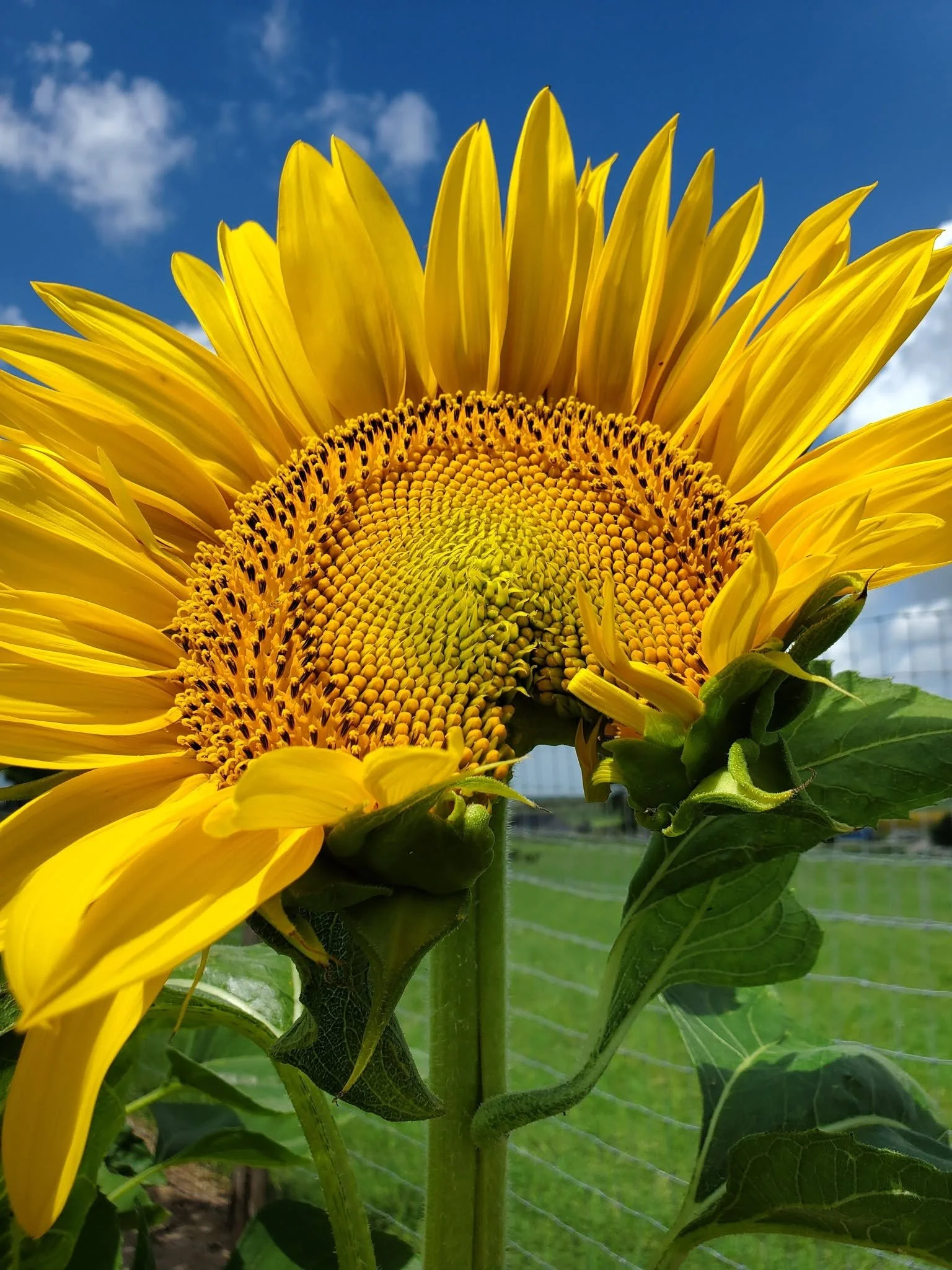
image from Carol Tenbrink Kranz
Many Bible passages trouble me. They push my limits; they invade my comfort zone; they require following Jesus as more commitment than I sometimes want to give. The worst, for me, came with Jesus’ statement, “Be perfect, therefore, as your heavenly Father is perfect.” We tend to define perfect as flawless or exact. Dang, that doesn’t sound like me at all. Humorously, the older I get the better I get at spotting my flaws. And we can’t quibble—the perfect used for the Father is the same grammatically as our target.
In the original language, the word includes being complete, and is in the future tense, giving the idea of being in a process. Here’s another verse that helps, “he who began a good work in you will carry it on to completion until the day of Christ Jesus” (Philippians 1:6). A couple of tips that might help.
First, recognize and acknowledge flaws. My dear niece Carol, Mrs. Sunflower, loves and grows them. Recently she sent a pic of this sunflower above that looked like a deer had bitten a chunk out. She explained, “This one is interesting, missing a portion not because something ate it, just grew that way.” She called it “perfectly imperfect,” the genesis of this post.
Accept flaws as part of you. Some can’t be changed. As a high school senior, I weighed 155 pounds, could do more push ups and sit ups than anyone in my PE class, and ran 6th man on our cross-country team, undefeated in our league. Then I got sick and dropped to 142, and STILL had love handles on my hips. Still do. Likely always will. Paul the apostle had a flaw, “To keep me from becoming conceited because of these surpassingly great revelations, there was given me a thorn in my flesh, a messenger of Satan, to torment me,” one that God chose to not remove (2 Corinthians 12:7-10).
Flaws can be character or behavioral issues. Scars from past bad decisions. I found tremendous freedom in learning that God still loved me in spite of all my imperfections. But we don’t use their reality as an excuse to not change them. Just today one of our pastors said, “God loves you as you are, but for God’s sake don’t stay there.”
Second, comprehend that some flaws can and should be changed, and trust that God works in your life. Be on the path of becoming the complete version of what God designed and desired you to be. Yes, that’s change. Yes, that can challenge us. Yes, that can stretch us. But cooperate with God in the process of him bringing the imperfect you to a perfect completion.
Kick Starting the Application
Think carefully about some flaws you’re aware of. What keeps you from accepting the ones you cannot change? What keeps you from beginning or completing the possible changes God that yearns for? This week, ask God to start the process, and give him explicit permission to change you.